Living on large acreage lots in Cave Creek or Desert Hills means relying on automated gates for everyday safety and convenience. When your drive system stops responding after a long, hot afternoon, it leaves your home vulnerable and cuts off basic driveway access. Quick troubleshooting helps identify whether the issue stems from dead batteries, misaligned sensors, or worn internal parts. Taking time to understand your system keeps your entry points operating smoothly without unexpected costly repairs.
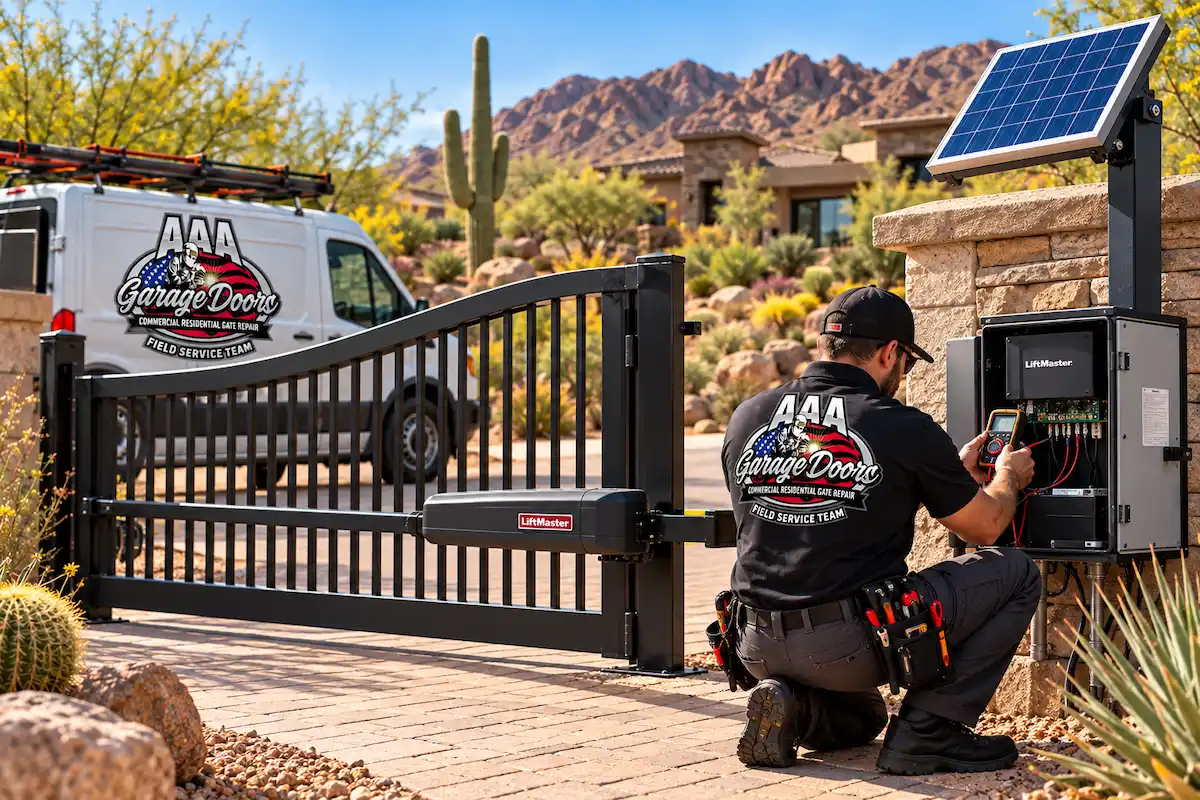
Heavy driveway barriers experience constant friction and stress from dusty desert winds and high daily sunlight exposure. Swing operators need accurate physical alignment so mechanical components do not bind up during seasonal thermal shifts. Simple preventative checks on electrical lines and properly maintained automatic gate systems can help prevent unexpected power cutoffs right when you need to leave for work. Knowing how to spot early signs of wear keeps your heavy gate running reliably throughout the entire year.
Direct Solution: Why Solar Gate Openers Fail in Arizona
Solar gate openers across North Valley properties usually fail because extreme heat kills storage batteries or dust blocks sunlight from charging panels. High summer temperatures speed up internal chemical breakdown inside lead-acid batteries, causing them to drop power under load quickly. Meanwhile, layers of fine silt on monocrystalline glass panels cut down daily solar charging output significantly. Checking your battery output voltage and wiping down your solar collector typically resolve power issues fast.
Unique Challenges for Cave Creek & Desert Hills Properties
Properties spread across Cave Creek and Desert Hills frequently rely on standalone off-grid power systems for driveway entry points. Extending main electrical lines across long rural driveways is often too expensive for most residential homeowners. However, harsh local desert weather tests control motherboards and mechanical drive arms on a daily basis. Thick dust storms cover photo-eye optical lenses, causing gates to stop randomly or continuously bounce backward.
Blistering summer heat creates severe stress inside dark junction boxes where electrical storage units sit all afternoon. Internal housing temperatures can easily rise twenty degrees above the outside air temperature during mid-summer peak hours. This extreme heat degrades charge controllers and shortens the overall lifespan of sensitive circuit components. Upgrading to weather-proofed, ventilated control boxes is essential for maintaining reliable daily operation in the desert.
Local wildlife like snakes, lizards, and field mice often nest inside warm control boxes during cool nights. Rodents frequently chew through plastic wiring insulation, causing direct short circuits across main control circuit boards. Sealing all wire entry ports with silicone or mesh stops unwanted pests from damaging your equipment. Protecting your control housing keeps electrical connections safe and prevents sudden system failure when you least expect it.
Key Components of Heavy-Duty Solar Gate Systems
| System Component | Hardware Type | Key Function / Feature | Maintenance Need |
| Solar Collector | Monocrystalline Glass | High-efficiency energy conversion from sunlight | Monthly cleaning of dust & debris |
| Battery Bank | Deep-Cycle AGM / GEL (12V) | Stores backup energy for night & cloudy operation. | Quarterly voltage & terminal check |
| Control Board | Microprocessor Circuit | System logic, signal processing & safety inputs | Annual inspection for pests & corrosion |
| Actuator Arm | Heavy-Duty Drive Motor | Physical push/pull movement of heavy barriers | Regular hinge lubrication & alignment |
A dependable solar entryway depends on four main hardware parts working together seamlessly every single day. Solar panels capture sunlight and send direct current energy straight into deep-cycle storage batteries. The main circuit board processes commands from remotes or keypads to power up the actuator motor. Properly designed solar gate systems rely on each of these components working together to keep heavy iron or wood barriers moving smoothly.
Monocrystalline panels offer far better energy conversion efficiency than older, cheaper polycrystalline options on the market today. Mounting panels facing directly south without tree shade ensures maximum solar energy intake during short winter days. Clearing off desert dust every few weeks allows full sunlight to penetrate the glass surface unobstructed. Sturdy mounting hardware stops strong desert wind gusts from turning your panel away from optimal sunlight angles.
Deep-cycle GEL or AGM batteries store reserves needed to cycle your entry barrier during dark hours and cloudy days. Unlike regular car batteries, deep-cycle units handle constant charging and discharging cycles without losing overall capacity too fast. Testing your battery under motor load reveals its real health status before your gate dies completely. Cleaning corrosion off copper terminal posts keeps electric current flowing freely during heavy physical gate cycles.
Mechanical actuator arms convert stored electrical energy into the physical force needed to push or pull heavy doors. Internal gears require clean grease so they do not wear down against heavy steel mounting hinges. Misaligned hinges or worn post brackets force drive motors to draw double the amperage from your battery bank. Keeping mechanical hinges greased and balanced reduces electrical stress on your solar system significantly over time.
Troubleshooting Common LiftMaster Solar Swing Gate Issues
| Problem Symptom | Primary Cause | Immediate Inspection | Recommended Action |
| No Power / Fully Dead | Degraded battery or dirty solar panel | Check 12V DC battery voltage under load | Clean solar glass & replace dead battery cells |
| Reverses Before Closing | Sensor alignment or high hinge friction | Inspect photo-eyes & swing hinges | Clear brush, wipe lenses & apply hinge grease |
| Incomplete Travel / Stops Midway | Shifted limit switch or thermal expansion | Check electronic limits & track binding | Recalibrate travel limits & check gate balance |
| System Outage / Out of Power | Complete electrical or circuit failure | Locate the emergency manual release key | Engage the manual override lever to operate by hand |
When an automated swing arm stops responding, checking battery charge voltage provides you with clear diagnostic answers right away. Proper battery voltage testing can help determine whether a 12-volt battery is fully charged, deeply discharged, or failing under load. A healthy battery may read around 12.6 volts at rest, while a major voltage drop during operation can point to weak internal cells. Replacing a failing battery restores the power needed to move heavy gate arms smoothly.
Safety photo-eye sensors represent another common point of failure along rural desert properties in North Valley areas. Infrared safety beams need exact optical alignment across driveways to allow automated closing commands to complete safely. Spider webs, fine dust layers, or overgrown desert brush frequently block invisible optical light paths without warning. Wiping lenses clean with a soft cloth and trimming low branches fix unexpected gate reversal issues fast.
Internal electronic limit switches define exact stopping positions when your gate reaches fully open or closed limits. Extreme temperature changes can expand metal gate posts, shifting physical limit settings out of correct alignment slightly. Recalibrating electronic travel limits ensures smooth operation without forcing mechanical arms against rigid stopping posts. Reading diagnostic flashing LED lights on your motherboard helps pinpoint specific electrical or switch errors quickly.
Manual key release levers allow you to disengage drive motors whenever power systems fail or shut down completely. Homeowners should test manual keys every few months to ensure mechanical release pins move without sticking. Spraying silicone lubricant into keyways keeps lock mechanisms turning smoothly in dry, dusty weather conditions. Knowing how manual releases work ensures you can always open your property during complete power outages.
Preventative Maintenance Checklist for Off-Grid Systems
Regular seasonal care extends equipment lifespan and stops frustrating property lockouts before they actually happen to you. Setting up a simple inspection routine lets you catch small mechanical and electrical issues before they get worse. Resolving small problems early saves money on emergency service calls and prevents full system failures down the road.
- Clean Solar Collectors: Wash off dust layers monthly using a soft cloth and clean water.
- Inspect Battery Terminals: Scrub off white corrosion buildup and tighten wire clamps every three months.
- Lubricate Mechanical Hinges: Apply marine-grade grease to heavy swing hinges and motor pivot points quarterly.
- Check Sensor Alignment: Clean the safety photo-eye lenses and trim back any tall brush that obstructs the safety photo-eye lenses. Clean and trim back the tall brush along light paths.
- Test Manual Release Keys: Verify emergency override keys operate smoothly without binding up inside lock cylinders.
Following these basic maintenance steps keeps your driveway entrance running reliably through extreme summer heat and winter cold. Simple routine upkeep prevents sensitive circuit boards from drawing excessive electrical current when opening heavy barriers.
Professional vs. DIY Gate Opener Servicing
Easy DIY jobs include basic tasks like wiping solar panels, spraying hinge grease, and clearing away tall weeds. Anyone with basic hand tools can clean battery terminals or adjust safety photo-eye lenses in a few minutes. However, diagnosing motherboard circuit shorts or performing professional welding services requires trained technicians with the right equipment and experience.
Working with high-voltage circuits or reprogramming main logic boards carries real risks of damaging expensive internal electronics. Reversing positive and negative wire leads can burn out control motherboards instantly during power connection tests. Certified repair technicians have specialised testing meters to trace electrical shorts safely without frying sensitive circuit boards.
Aligning heavy steel posts, re-welding broken hinges, and balancing heavy barriers require specialised field welding tools. Hanging a heavy gate out of level places enormous strain on the operator’s motor gears over time. Professional gate specialists ensure heavy structural frames sit perfectly plumb, protecting your motor from breaking down early.
Frequently Asked Questions
How long do solar gate batteries last in the Arizona desert?
Solar batteries in Cave Creek usually last two to three years because high summer heat degrades internal cells. High temperatures speed up chemical degradation inside sealed lead-acid storage cells, reducing total holding capacity over time.
Can I operate my automated entryway during extended cloudy weather?
Properly sized solar systems hold enough battery charge to handle several days of standard residential operational cycles. Deep-cycle batteries keep enough backup reserve power to operate normal home entry gates even during rainy weather.
Why does my entry arm reverse direction before closing completely?
Gates usually reverse direction because safety sensors are misaligned, objects block pathways, or heavy hinges lack grease. Wiping off sensor lenses and greasing dry gate hinges usually fixes false obstruction reversing issues immediately.
What size solar panel do I need for a heavy residential swing entry?
Most standard single-swing gates need at least a 20-watt solar panel to maintain consistent daily battery charging. Larger double-swing gates or heavy iron designs usually require 40-watt panel setups for reliable operation.
Ensure Reliable Access for Your Property
Keeping your driveway entrance secure and operational requires heavy-duty hardware built to withstand harsh desert conditions daily. Professional inspections help spot hidden electrical wear and hinge strain before unexpected failures disrupt your daily routine. Working with experienced local repair technicians guarantees long-term performance, home security, and total peace of mind.