Garage door spring failure is a major emergency in Phoenix, AZ, where extreme attic temperatures accelerate metal fatigue in high-tension steel. When a primary torsion spring snaps, the entire 150+ pound panel weight rests directly on the lifting assembly, risking severe opener motor damage and trapping vehicles inside. Homeowners requiring fast, professional intervention rely on certified Garage Door Spring Repair Services in Phoenix, AZ to clear heavy tension safely and regain immediate garage access.
AAA Garage Doors AZ provides rapid-response spring replacement services, utilizing oil-tempered, 25,000-cycle high-grade replacement springs to restore structural balance. Our certified local technicians execute full-system safety audits, cable realignments, and force limit adjustments to guarantee safe, long-term operational performance.
The Initial Problem: Trapped Vehicle & Severe Torsion Damage
Our client was preparing for their morning commute when they heard a loud bang from the garage, similar to a gunshot. Upon checking, they found the top metal panel severely misaligned, and the automatic motor was humming without lifting the door. Attempts to manually override the emergency release cable failed because the entire 180-pound door weight was resting purely on dead steel, requiring specialized garage door spring repair to safely release the tension.
When our certified technician arrived on-site in Phoenix, a visual inspection confirmed that the primary left-side torsion spring had completely split in two. The homeowner had repeatedly pressed the wall button, which caused extreme garage door opener strain and slightly warped the top drive bracket. Continuing to run a motorized opener with a broken spring risks stripping internal nylon gears or burning out the logic board.
Safety Alert: High-tension springs hold hundreds of pounds of mechanical energy. Attempting a DIY fix without professional winding bars and proper safety protocol can lead to catastrophic property damage or severe personal injury.
Technical Diagnoses & On-Site System Inspection
Before starting any physical work, our technician performed a complete 25-point safety inspection across the entire lifting assembly. While the primary issue was a snapped torsion spring, high-tension systems rely on multiple interconnected parts that wear down simultaneously under Phoenix’s dry heat.
Our inspection revealed three major underlying issues that needed immediate attention alongside the spring replacement: I have reviewed the text, and it appears there are no spelling mistakes present. If you have any specific sections you would like me to look at more closely, please let me know!
- Unbalanced Tension Distribution: The secondary right-side spring showed severe metal fatigue, hairline cracks, and loss of coil elasticity, meaning it was bound to fail within weeks.
- Frayed Lift Cables: Both bottom corner brackets had loose, worn cables that were beginning to strip away from the cable drums due to sudden weight drops.
- Dry End Bearing Plates: The central bearing plate was dry and grinding, creating friction that added unwanted resistance during every cycle.
Step-by-Step Professional Repair & Replacement Process
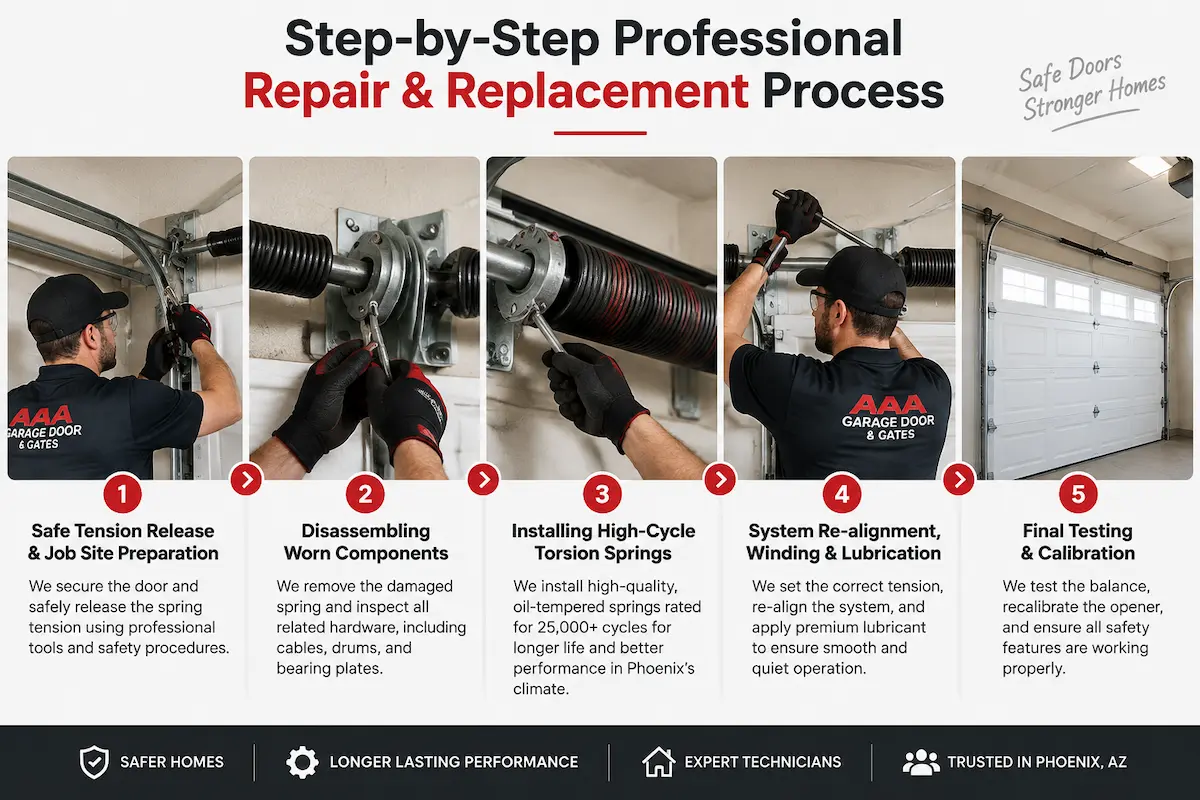
Step 1: Safe Tension Release & Job Site Preparation
Our technician began by locking the door panels securely to the track using heavy-duty locking pliers to prevent unexpected falls. Using tempered steel winding bars, we carefully unwound the remaining tension from the unbroken secondary spring. Following certified garage door safety standards to release this stored energy is the most crucial step before removing hardware.
Step 2: Disassembling Worn Components & Spring Extraction
Next, we loosened the center stationary cone and unbolted the bearing plate assemblies from the header bracket. The damaged torsion shaft was slid out to remove both the fractured spring and the fatigued partner spring. We also inspected the cable drums for grooves or notches that could cause new cables to slip in the future.
Step 3: Installing High-Cycle, Oil-Tempered Torsion Springs
We upgraded the system from standard 10,000-cycle factory springs to high-grade, oil-tempered torsion springs rated for 25,000+ operational cycles. These coated steel springs resist rust and withstand the extreme summer heat of Phoenix without losing wire elasticity.
Step 4: System Re-alignment, Winding, and Lubrication
After mounting the new springs onto the torsion bar, we reattached the lift cables, setting exact tension on both left and right drums. Using precise winding ratios based on door height and panel weight, we wound the springs to factory specifications. Finally, we applied high-performance silicone lubricant to all coils, rollers, and bearing assemblies.
Before & After Performance Comparison
| Performance Metric | Initial Inspection Status | Post-Service Calibration |
| Operational Status | Completely Trapped & Unusable | Smooth, Whisper-Quiet Motion |
| Opener Motor Load | Severe Overload / Risk of Burnout | Zero Strain (Balanced Weight) |
| Spring Cycle Rating | Failed Standard Springs (10k Cycles) | Upgraded High-Grade Steel (25k+ Cycles) |
| Emergency Response Time | Car Trapped at 7:00 AM | Fully Resolved Under 2 Hours |
Following high-tension calibration, scheduling regular maintenance helps prevent sudden track misalignment and spring failure. Professional intervention ensures correct balance across all moving hardware, extending your system’s operational lifespan. For complete component servicing or emergency assistance, contact our certified team for reliable garage door repair.
Results, Balance Testing & Long-Term Preventative Care
Once the physical installation was complete, our technician performed a manual balance test by disconnecting the automatic opener. A properly balanced garage door should easily lift with one hand and stay stationary when stopped halfway up the track. The newly balanced door stayed perfectly in place, confirming that the spring tension matched the panel weight down to the ounce.
We reconnected the automatic opener, recalibrated the travel limits, and tested the auto-reverse safety sensors using a wood block test. The door reversed smoothly upon contact, meeting full safety compliance standards. The homeowner was able to drive out to work safely within two hours of their initial call, with a fully restored and whisper-quiet system.
To prevent sudden breakdowns in the Arizona climate, we recommend applying synthetic garage door lubricant to the spring coils every six months. Regular visual checks for gaps in the coils or frayed cables can help catch minor wear before it turns into an emergency trap.
Frequently Asked Questions (FAQs)
Should I replace both garage door springs if only one snaps?
Yes. Both springs endure the exact same operational cycles and wear. Replacing both simultaneously prevents a second breakdown, saves service costs, and keeps your door properly balanced.
Can I open my garage door manually if the spring is broken?
No. Springs bear 90% of your door’s 150+ lb weight. Operating a door with a broken spring can burn out the opener motor or drop the heavy door, causing serious injury.
How long do garage door torsion springs usually last in Phoenix, AZ?
Standard springs last 10,000 cycles (3 to 7 years), though Phoenix’s intense heat accelerates metal fatigue. Upgrading to oil-tempered 25,000-cycle springs ensures much longer performance in local conditions.